欧美日韩黄网欧美日韩日B片|二区无码视频网站|欧美AAAA小视频|久久99爱视频播放|日本久久成人免费视频|性交黄色毛片特黄色性交毛片|91久久伊人日韩插穴|国产三级A片电影网站|亚州无码成人激情视频|国产又黄又粗又猛又爽的

相關(guān)習(xí)題
 0  60794  60802  60808  60812  60818  60820  60824  60830  60832  60838  60844  60848  60850  60854  60860  60862  60868  60872  60874  60878  60880  60884  60886  60888  60889  60890  60892  60893  60894  60896  60898  60902  60904  60908  60910  60914  60920  60922  60928  60932  60934  60938  60944  60950  60952  60958  60962  60964  60970  60974  60980  60988  159627 

科目: 來(lái)源:不詳 題型:閱讀理解

It’s interesting that the arrival of snow has a different effect on people in different countries. For some countries it is an important happening to celebrate each year, while for others it is a catastrophe (災(zāi)難) or even a wonder.
There are countries between these two extremes (極端) that normally expect snow some time over the winter months, but never receive snow regularly or in the same quantities(數(shù)量) every year. Britain is one such country, for which the arrival of snow quite simply creates problems. Within hours of the first snowfall, however light, roads are blocked, trains and buses stop in the middle of traffic. Normal communications are affected as well, telephone calls become difficult and the post immediately takes more time than usual. Almost within hours, there are also shortages(不足) -- bread, vegetables and other things -- not because all these things can no longer be produced or sent to shops, but mainly because people are frightened, and go out to store up these commodities (日用品), “just for fear that something bad should happen.”
Why then does snow have this effect? After all, the Swiss, Austrians and Canadians don’t have such problems. It is simply because there is not enough planning and preparation. We need money to buy equipment to deal with snow and ice. To keep the roads clear, for example, requires snow ploughs and machines to spread salt. The reason why a country like Britain does not buy some ploughs is that they are only used for a few days in any one year, and the money could be more useful in other things such as hospitals, education or helping the old.
小題1:According to the writer, Britain is a country____.
A.which has regular snowB.which is not well prepared for snow
C.for which snow is not a problemD.for which snow is a wonder
小題2:The arrival of snow in Britain affects all of the following except____
A.trafficB.communicationC.food suppliesD.service quality
小題3:After a few hours’ snowing there are often shortages of food because______
A.shops have closed downB.people buy as much as they can
C.farmers can’t produce any moreD.people eat more vegetables in winter
小題4:The first reason that the British don’t buy snow ploughs is that______
A.spreading salt is good enoughB.old people need more money
C.snow ploughs are not used oftenD.the hospital is more important

查看答案和解析>>

科目: 來(lái)源:不詳 題型:閱讀理解

閱讀下列短文,根據(jù)短文中的信息完成文后表格。在標(biāo)有題號(hào)的橫線上,寫出空缺處所填單詞的正確形式。(每空一詞)
What do we really mean by being open? Being open is a kind of invitation to others to come in, to speak and to share. It is important in letting others get to know how we think and feel. In this way we will be understood and accepted by others. If we aren’t open with others, we won’t fully believe in ourselves or others.
Here are a few ways for you to be more open. First, make your outside behavior the same with your inside feelings and thoughts. Second, share how you really feel about something instead of just opinions. Third, try to change your questions into statements(陳述) and talk in the first person so that people will understand you more easily. For example, you might say, “I feel happy that you’re here,” instead of, “Are you glad that you’re here?” Finally, try not to say, “I don’t know.” This usually means I don’t want to think about it any more.
Remember also that it is not suitable to be open with everyone in every situation. You may want to be more open with close friends, but not with people you don’t know well, because you are not sure how someone else will use what they know about you. Besides, some people may not be used to too much openness. If we say everything we feel or think to them, they will feel very uncomfortable at times.
In all, being open is a good way for us to get on well with other people, but we’d better keep the balance between being open and not being too open.
Title: Being open
Meanings of being open
 小題1:  others to come in, to speak and to share.
Show others    小題2:   we think and feel.
Let others ___小題3:___ and accept us.
Believe in ourselves and others by being open.
  小題4:  to be more open
Make 小題5: your outside behavior is the same with
your inside feelings and thoughts.
Try to share your   小題6: feelings.
Make statements instead of 小題7:and use the first
person.
Try not to say, “I don’t know.”
Reasons for not being too open
Someone may use your  小題8:  to hurt you.
You will make them feel very uncomfortable  小題9:.
Conclusion: It will   小題10: us get on well with others if we keep the balance between being open and not being too open.
 

查看答案和解析>>

科目: 來(lái)源:不詳 題型:閱讀理解

Many of us feel uneasy when someone stands too close to us, talks to us too loudly or makes eye contact(接觸) with us for too long. But have you ever wondered why those things make you uncomfortable?
It’s all about personal peace, which means not only an imaginary space around the body, but also the space around all the senses. People feel that their space is being violated(侵犯) when they meet with an unwelcome sound, smell or look. This is probably why a man on a crowded bus shouting into his mobile phone or a woman next to you putting on strong perfume(香水) makes you feel angry.
Whether people have had a stronger wish to protect their personal space in recent times is hard to say. Yet studies of airlines show that people have a strong desire(渴望) to have space to themselves. In a survey by TripAdvisor, a travel website, people said that if they had to pay more for some extra service, they would rather have larger seats than extra food.
Although people may need their personal space, some hardly realize it. For example, people on a bus who hold newspapers in front of their faces to read in fact keep a distance from strangers.
Go and watch a library table. You will notice that one of the corner seats will usually be taken first, because they are the farthest way. What if someone sits opposite to you? Maybe you will pile up books as if to make a wall.
Preference(偏好) for personal space are different from culture to culture. Scientists have found that Americans generally prefer more personal space than people from other cultures. In Latin(拉丁人的) cultures, however, people are more comfortable standing close to each other.
小題1:The writer mainly _________ in this article.
A.tells us how to achieve personal space
B.explains why people need personal space
C.introduces some knowledge about personal space
D.a(chǎn)rgues for the importance of keeping personal space
小題2:Who might feel his personal space is safe according to the passage?
A.A person who has to sit next to a lady putting on strong perfume.
B.A person who has been watched by a stranger for a long time.
C.A person who hears strange noises when reading at home.
D.A Latin boy who is chatting with a friend sitting close to him.
小題3:What can we know from the survey by TripAdvisor?
A.People need a smaller personal space in recent times than before.
B.People have a strong desire for personal space in recent times.
C.There are not enough seats on the plane to meet people’s needs.
D.Food service is better provided than seats on the plane.
小題4:Which of the following is TRUE according to the passage?
A.The space around the body is more needed than that around all the senses.
B.If you hold newspapers on the bus, your personal space won’t be violated.
C.People usually choose the corner seats first in a library for personal space.
D.Different cultures share the same preferences for personal space.

查看答案和解析>>

科目: 來(lái)源:不詳 題型:完形填空

People around the world celebrate the new year. However, not all countries celebrate in the   46   way. When it is the New Year, people celebrate for several days. In some countries, the New Year is not on the same date every year. It can depend    47   the seasons, the moon or the sun.
In many countries, New Year begins on January1st, but people start celebrating on December 31st, New Year’s Eve. In New York, many people go to celebrate in Times Square. While they’re waiting for the New Year, they    48   music, sing traditional songs and have fun. Just before 12 o’clock, everyone    49   down from 10, 9, 8 … As soon as it’ s 12 o’clock, everyone shouts very loudly, “Happy New Year!” and they say, “Out with the old year and in with the new!” Suddenly there    50  fireworks and special drinks. Sometimes people sing an old song   51  “Auld Lang Syne”.
New Year’s Day is often a family day. Some people relax at home. Some families get together for a special    52  with grandparents, aunts and uncles. When the weather is    53  , many families go out for a walk.
On New Year’s Day, many people make resolutions for the new year. They write down a list of things, such as “I will help out more at home. I will work harder at school.”
Or “I won’t spend so much time    54  video games.” When they have made their list, they read it to their family or friends.
So it does not matter how they celebrate, for people in countries all over the world, it is a time to    55  goodbye to the old year, and to welcome the new.
小題1:
A.differentB.difficult C.same D.easy
小題2:
A.inB.onC.forD.like
小題3:
A.hear B.listen to C.sound D.hear of
小題4:
A.countsB.countC.countedD.counting
小題5:
A.a(chǎn)m B.isC.beD.a(chǎn)re
小題6:
A.calls B.callingC.called D.call
小題7:
A.mealB.breakfast C.lunch D.supper
小題8:
A.well B.goodC.hotD.fine
小題9:
A.playB.playing C.playedD.plays
小題10:
A.sayB.tell C.talkD.speak

查看答案和解析>>

科目: 來(lái)源:不詳 題型:完形填空


More and more Chinese people go traveling abroad during these years. But not all tourists behave well in theplaces of    51  . Recently, a story about a 15-year-old Chinese tourist    52   a heated discussion online.
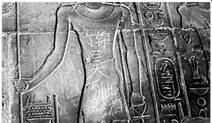
The 15-year-old teenager carved “Ding Jinhao was here”    53   Chinese in the 3,500-year-old Luxor Temple(盧克索神廟). A Chinese traveler took a    54   and shared it on Sina Weibo on May 24.
Many people were    55   about what Ding had done and decided to search the Internet for the boy. It    56   them just one day to find information about him in Nanjing.    57  , Ding’s parents quickly said sorry to the media. “We want to say sorry to the Egyptian people and to people   58   have paid attention to this matter across China,” Ding’s mother said.
Ding’s parents said they should    59   it and their son had learned his lesson.
According to Xinhua, local Egyptians had worked to try and    60   the sculpture(雕像). Although there was some improvement, the words could not be totally wiped off.
小題1:A. luck     B. interest   C. joy
小題2:A. has caused             B. has closed      C. has avoided
小題3:A. of           B. with      C. in
小題4:A. photo             B. rest        C. look
小題5:A. strict              B. angry         C. happy
小題6:A. cost          B. took           C. spent
小題7:A. After that        B. Just now           C. So far
小題8:A. whose            B. which        C. who
小題9:A. forget             B. face           C. find
小題10:A. make            B. buy            C. clean

查看答案和解析>>

科目: 來(lái)源:不詳 題型:閱讀理解

At present, more and more people are crazy about travelling. Why do people travel?  “To see more of the world,” many people would say. But travelling abroad now means much more than that for the growing number of Chinese tourists. Of course it offers us good opportunities to meet people from other countries, learn about their culture and customs.
According to the United Nations World Tourism Organization (UNWTO), more than 1 billion people travelled to another country in 2012. In 2012, Chinese people travelled abroad 30 percent more than in 2011. The prosperity (繁榮) of the tourism industry can also bring both our country and foreign countries great economic benefits (經(jīng)濟(jì)利益). Chinese people usually join large tourist groups and visit several countries in one trip.
Chinese people don’t just travel for sightseeing. The China International Travel Service Company said that all their tour trips sold out a month before Christmas Day. Stores offered discounts (打折) during that time, so shopping in Europe and the United States is popular among Chinese travellers.
In December, China is going through a very cold winter. So many people like to go to some countries in Southeast Asia because the weather there is quite pleasant.
The improvement of living standards means more Chinese can travel abroad. But many of them don’t have a sense of public manners. A report by Living Social website in March 2012 even listed Chinese as the world’s second worst tourists.
If you want to change that bad name, remember to avoid the following: littering, spitting, snatching bus seats, line-jumping, taking off shoes in public, talking loudly and smoking in non-smoking areas. Besides, we should learn some necessary manners of foreign countries.
小題1:Chinese people travel abroad not to _________.
A.go shoppingB.see more of the world
C.go sightseeingD.make money
小題2:According to the United Nations World Tourism Organization, ________.
A.30% of the people who travelled abroad are Chinese
B.the number of people who travelled abroad rose by 30%
C.more than 1 billion people travelled abroad in 2012
D.more than 1 billion Chinese people travelled abroad in 2012
小題3:Which of the following is NOT true about Chinese people? _________
A.Chinese people like joining large tourist groups.
B.Many Chinese like to go to Southeast Asia in winter for sightseeing.
C.More and more Chinese people can travel abroad now.
D.Chinese are the second worst tourists in the world.
小題4:As a good tourist, you should ________.
A.litter and spit here and there
B.jump the line and take off the shoes in public
C.have a sense of public manners
D.speak loudly and smoke as you like
小題5:What’s the best title of the passage? __________
A.TravellingB.Travelling abroad
C.Chinese touristsD.Chinese people like travelling

查看答案和解析>>

科目: 來(lái)源:不詳 題型:閱讀理解

People can find jobs in many ways. Sometimes you can find a job easily, by walking into a local store and looking at its notice board(布告欄). Local stores often have areas for people to put small signs telling the services that they need or they can provide.  Such services include looking after children or cleaning houses.
Another popular tool for finding a job is the Internet. For example, people around the world can
use the Craigslist Web site to buy things, meet people or find a job. It is said that the site can receive two million new jobs each month.
Another useful way to find a job is through a university. For example, students at the University
of Texas can go to the job center to get help. Many college students like this way better.
At times, some experts(專業(yè)人士)can also help people find a job. Susan Miller has her own company called California Job Services in Los Angeles. She says her company helps people find a job by first helping them understand their strengths, goals and interests. Then she provides them with methods to help them find the right job. So with her help, many people have succeeded in finding a good job.
小題1:On the Craigslist Web site, you can't________ .
A.find a jobB.meet people
C.sell your old thingsD.do some shopping online
小題2:According to the passage, college students prefer to find jobs by _________
A.visiting the Internet
B.a(chǎn)sking experts for help
C.looking at the notice board
D.going to a job center in the university
小題3:The underlined word "strengths" in the last paragraph means_________ .
A.長(zhǎng)處B.強(qiáng)度C.力量D.人數(shù)
小題4:Which of the following statements is TRUE.?
A.Local stores have few areas for people to put signs
B.You can only get one service on the notice board
C.The Craigslist Web site can get two million new jobs each week
D.Susan Miller has helped many people find a good job successfully
小題5:The main idea of this passage is about________ .
A.how to find expertsB.ways of finding a job
C.how to study and workD.ways of setting up a job center

查看答案和解析>>

科目: 來(lái)源:不詳 題型:閱讀理解


We may know that there are four basic periods for human beings to pass through when you enter and live in another country. This process(變化過(guò)程) helps you deal with culture shock(文化沖擊).
Culture shock begins with the "honeymoon period". This is the time when you first arrive in a place where everything about the new cu1ture is strange and exciting. You see new things, hear new sounds and language, eat new kinds of food. This period can last for quite a long time because you feel very happy.
Unluckily, the second period can be more difficu1t.  After you have got used to your new life, you can become very tired and begin to miss your motherland, your family, your friends, your pets and so on. Al1 the little prob1ems in life seem to be much bigger and more worrying when you face them in a foreign country. This period can be very difficult and lead to moving backwards quickly.
The third period is called the "adjustment(調(diào)整) period". This is When you begin to realize that things are not so bad in the new country. Your sense of humor usually becomes stronger and you realize you are becoming stronger by 1earning to take care of yourself in the new place. Things are still difficult, but you are now a survivor(善于求生者).
The fourth period can be cal1ed "at ease at last". Now you feel quite comfortable in your new place. You can deal with most problems that you have. You may still have prob1ems with language,but you know you are strong enough to deal with them. At this time, you may feel a little uncomfortable if you go back to your motherland.
小題1:According to the passage, culture shock usually happens when you
A.get married to a foreignerB.live in a big city
C.go to live in a foreign countryD.meet foreigners in your motherland
小題2:During the first period of the process, you feel
A.sad and lonelyB.happy and excited
C.a(chǎn)ngry but strongD.easy but uncomfortable
小題3:You will find that you are a survivor in
A.the lst periodB.the 2nd period
C.the 3rd periodD.the 4th period
小題4:The fourth period can be regarded as a period of being
A.relaxingB.worryingC.tiringD.a(chǎn)djustable
小題5:We can conclude(lgth$it) from the passage that
A.Living in another country is fun
B.it's boring to live in another country
C.knowing about culture shock is hard
D.it's not easy to dea1 with culture shock

查看答案和解析>>

科目: 來(lái)源:不詳 題型:閱讀理解

We all dream about things that we would like to do we hope to achieve in the future. But are everybody’s dreams the same? Here are some of the findings of a survey about hopes and dreams, in which thousands of students across China took part in it.
What are the hopes of teenagers?
We received several different answers to the question: what would you like to do after finishing your education? It seems some students would like to start work as soon as possible, so that they can help provide better lives for their parents. Other students hope to continue studying after finishing school and to go to university. Although money is important, many teenagers said they want to do jobs they enjoy. According to the survey, the most popular choice of job is computer programming.
What are the dreams of teenagers?
Teenagers have all kinds of dreams. Some are more realistic than others. For example, many students said they would like to be volunteers if Beijing could hold the World Cup, maybe working as translators or tour guides. And quite a few said they dream of going to the moon one day.
According to the survey, less realistic dreams are also common, but many students reported that they were willing to work hard to achieve their dreams. Quite a few dream of becoming famous, perhaps famous sports people or singers. Some said they’d like to go on exciting trips; one students said she’d love to sail across the Pacific Ocean. And then there are dreams that are impossible; three students said they’d like to be able to fly!
Conclusion It was clear from the survey that teenagers have similar hopes. It seems that most students hope to have a good education and find a good job. On the other hand, students dream of very different things: good things, and even crazy things. It is very important to dream, so hold on your dreams; one day they may just come true.
A survey about some Chinese students’ _____小題1:_____.
Hopes of teenagers
Some students hope to start working as soon as possible.
Others hope to continue studying after finishing school and to go to university
小題2:_________is the most popular choice of job.
Dreams of teenagers
Some students have more realistic dreams such as working as volunteers at the 2008 Olympics, etc.
Others have less realistic dreams such as becoming famous sportspeople or singer, _____小題3:____and sailing across the Pacific Ocean.
Some students ___小題4:____such as being able to fly.
Conclusion: The survey shows that teenagers____小題5:______
 

查看答案和解析>>

同步練習(xí)冊(cè)答案